
Born a Crime: Stories from a South African Childhood by Trevor Noah & Vetkoeks with Brie and Jam
I am a little late reading this book by Trevor Noah, which was published back in 2016. It tracks Noah’s life in South Africa during and post-apartheid from his half-white (Swiss) and half-Black (Xhosa). This book is everything: hilariously funny, heartbreakingly sad, and filled with a healthy dose of historical facts. It has been calmly chilling out on my shelf for years and I definitely regret not starting sooner. Each chapter follows a similar formula to all those 90s sitcoms we all love (I’m thinking along the lines of 7th Heaven or Boy Meets World): something funny, something tragic, a good moral lesson, and then circles back to the funny. But, more overwhelmingly, this book reads like a love letter to Noah’s mother – who was a pillar of love and unswerving faith and strength in the face of domestic violence, poverty, and harsh structural (and every other form of) racism. Because of the way they’re structured, you can get away with reading this book in chunks and even taking a long break in between chapters (cheating on your books with other books hehe), but it is much more powerful when read all together. The book crescendos to a powerful last chapter that tells so many truths about deep-rooted familial love and the moment quite literally had me holding my breath for a good portion of it.
As a product of interracial marriage, and currently in an interracial marriage of my own, in a city that is visibly and undeniably segregated (albeit, not technically required by law), I was able to really connect to Noah’s confusion around where he belonged in the world. Being an interracial child meant Noah was “classified” as colored and this was an actual crime at the time in apartheid South Africa (thus…the title of the book!). He was constantly forced to “pick” a side when he’d rather just “be.” One of the first lessons I remember from childhood was centered around the duality of life, even though I didn’t have the vocabulary for it at the time. My parents were different in everything, similar to Noah’s. Aside from different religions and races, they were also from starkly different socioeconomic classes. Yet, despite all of the differences, our family worked and functioned beautifully. We sat together, happily munching on a meal of empanadas de carne with a side of mashed potatoes and gravy, in harmonious and integrated bliss. I grew up learning to value searching for my own truth and to accept anyone no matter where they were from or what they looked like. I believe that I am lucky that this lesson of acceptance came before my lessons in the realities of the world and how it can be cruelly unaccepting of anything that it could not clearly categorize. Noah learned this lesson too, but it was punctuated by harsher conditions of poverty and violence.
Did I laugh? Yes, of course. Noah is a brilliant comedian. Did I cry? Hell yes, and it surprised me too. From the first page, I realized that this book was not going to be a book of laughs that just happened to give me a glimpse into the harsh laws of a racist regime BUT it was going to be raw and personal and gritty with moments of laughter. Did I throw this book at my husband when I finished demanding that he read it? YESS, and I would throw it at you too if I could.
Final Recommendation:
Skip it! / Put it on your List! / ((GO READ IT NOW!))
In one scene, Noah reminisces about his hustling days in the South African slum of Alex where he used to sell burned CDs and DJing parties. He talks about how to make your money grow and the dangers of eating all your profits (and I HEARD that). He mentioned that almost every morning during this time he would eat something called vetkoeks – a fried dough that translates to “fat cake” in Afrikaans. My husband, who is Dominican, said these are very similar to “Yani Queques,” or the Caribbean Johnny Cakes, that he grew up eating. In DR they often just fry the empanada dough and eat it, while elsewhere in the Caribbean they add in cornmeal. Vetkoeks are classic, quick, and cheap street food that is extremely versatile and can be either sweet or savory or eaten on its own. It’s deep-fried simple deliciousness.
Here’s the quote that inspired this post:
“When you’re trying to stretch your money, food is where you have to be careful. You have to plan or you’ll eat your profits. So every morning for breakfast we eat vetkoek, which is fried dough, basically. Those were cheap, like 50 cents a pop. We could buy a bunch of those and have enough energy to sustain us until later on in the day”
Trevor Noah, pages 213-214
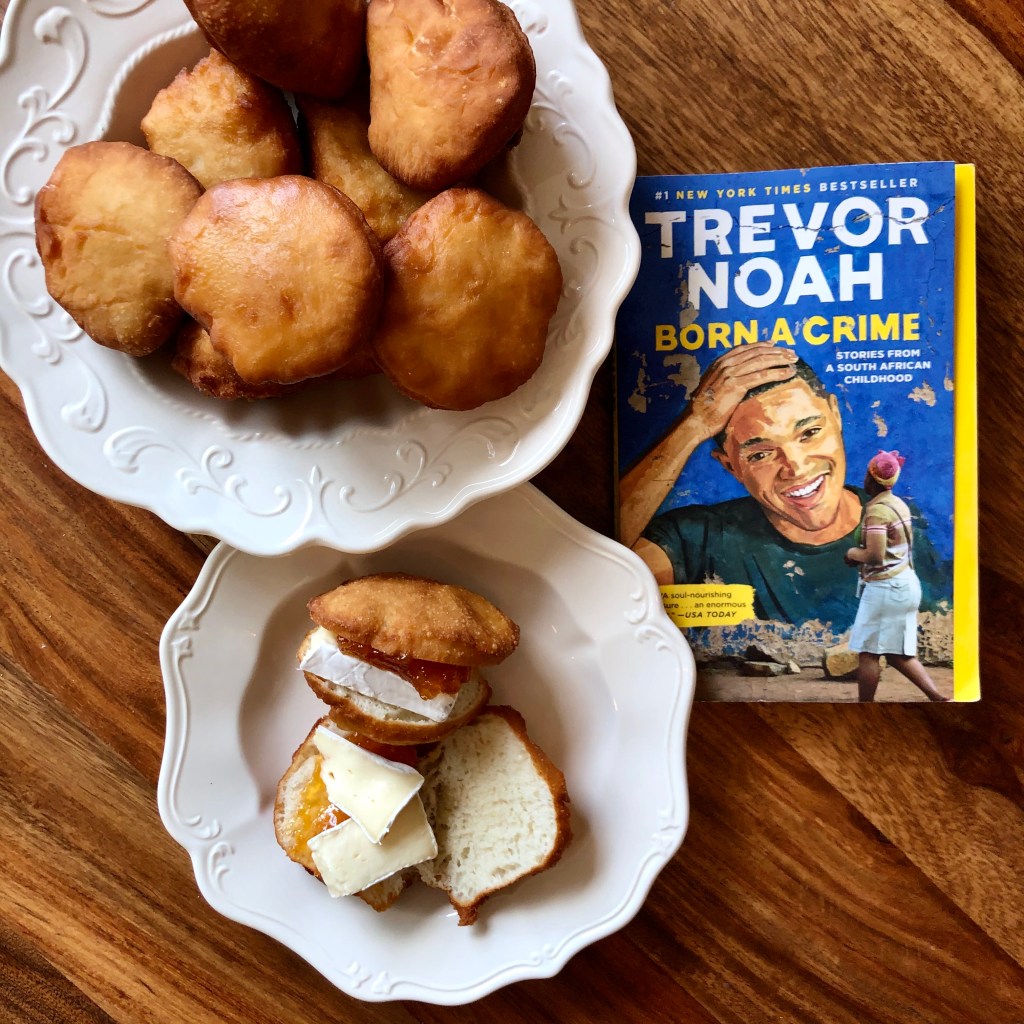
Vetkoek Recipe
Adapted from Africanbites.com
- 5 ½ cups cake flour plus a bit more for kneading* (I used almost a cup more!)
- 2 teaspoons of salt
- 3 tablespoons sugar
- 1 packet of active dry yeast
- 2 cups lukewarm water (not too hot or you’ll hurt your yeast!)
- Fill with Brie and Apricot Jam
*If you can’t find cake flour or just want to make this without a trip to the supermarket, cake flour is essentially just regular AP flour with less gluten and a little finer. Decrease your flour measurement by about half a cup if you choose to use regular AP flour!
How-To:
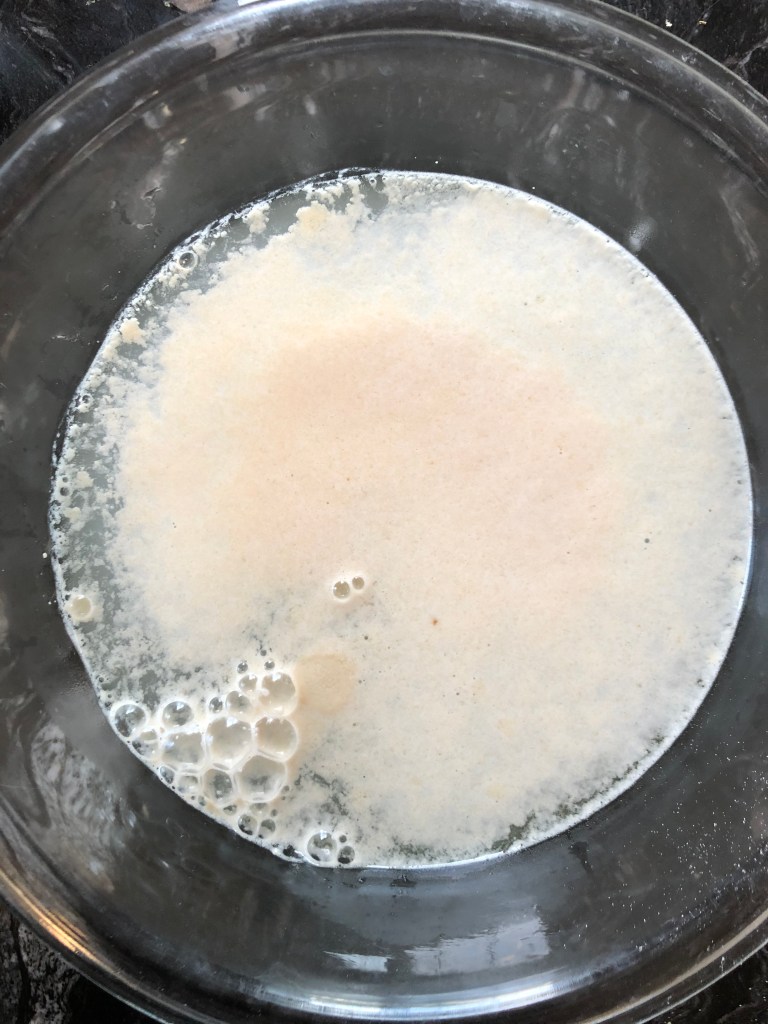
- In a large bowl, mix salt, sugar, warm water, and yeast. Set aside for 5 to 10 minutes. This is an important step to activate your yeast – if you lessen the wait time your dough will not rise. Wait for the yeast to release bubbles.
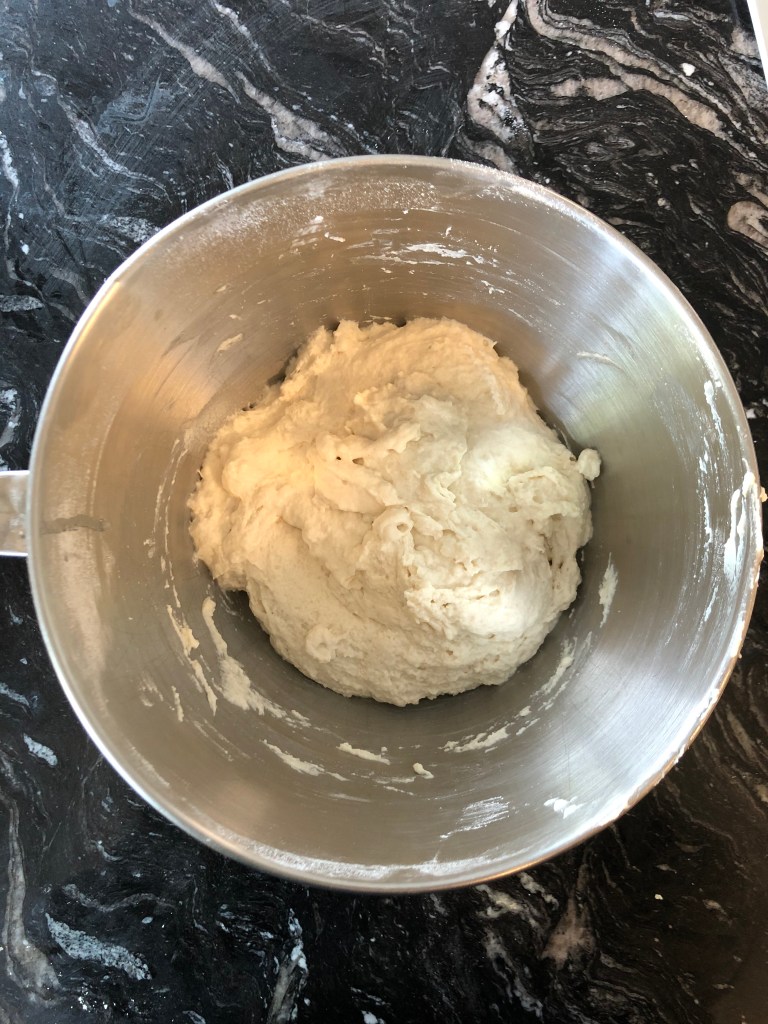
- Add flour then mix until everything has come together into a soft and sticky dough. This is easiest with a wooded spoon or a rubber spatula.
- Cover loosely with a clean cloth and let rise in a warm, draft-free place for 1 to 2 hours or until doubled. I let mine rise in the oven on the “bread proof” setting for 2 hours and then it was ready. **If you use this setting make sure not to put the bowl in right away because it will be too hot – it needs time to level out the heat inside.
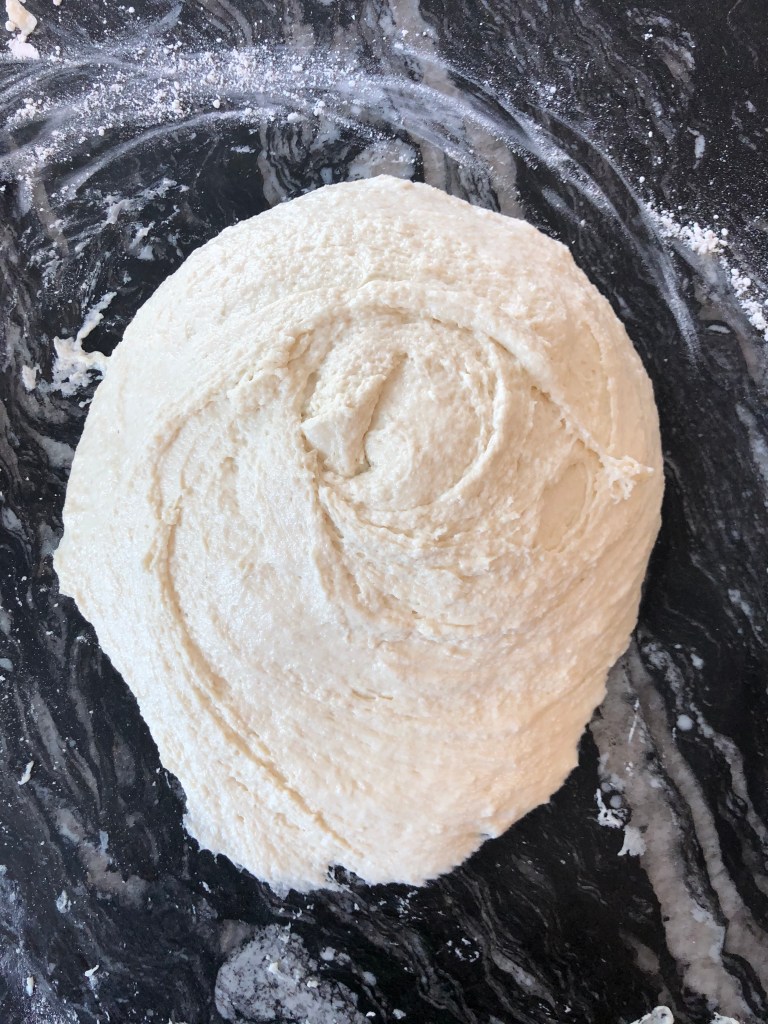
- Turn dough out onto a heavily floured surface, flatten to knock out air bubbles, and knead to make firm, you may add flour as needed. My dough was veryyyy sticky and needed a lot of flour added (about a cup more). Not sure where I went wrong but the final product was still light and delicious.
- Roll out dough into 1 inch thick and use a 3 inch or larger biscuit/cookie cutter to cut dough.
- In a large/deep, saucepan pour your vegetable oil, until it is at least 3 inches (I make sure it reaches over my first knuckle) over medium heat until oil is 350 degrees. If you are new to frying, resist the urge to crank up the heat high to get your oil warmed up and allow it to slowly get to the temperature it needs to be. If your oil is too hot, the outside will begin to brown and burn before the inside cooks through.
- Fry until golden brown about 2-3 minutes on each side depending on size, then flip to the other side (a 3 inch circle should take around 5-6 total minutes). Remove with a slotted spoon and drain on a paper napkin (best to use a paper napkin over a wire cooling rack).
- Let it cool for about 3 minutes then cut with a serrated knife and place your slice of brie and a spoonful of apricot jam inside and enjoy! (If you don’t have these on hand a pro tip is to just sprinkle some powdered sugar on them and enjoy while they’re warm!!)



 The Knead to Read